
This Was Never The Plan: When “School Can’t” Led Us Home.
Our story of 'School Can’t' is one of many. I hope that because I am a practicing teacher who truly loves the profession—and because my youngest is still in school and doing well—readers will see that I am not being negative toward schools or teachers. This is simply our story of navigating the right path for our eldest. My hope is that by sharing our journey, we can help others find their way, too."
The Weight of the "Couch Moment"
I remember that night so clearly. My partner and I sat together at the end of another extremely challenging day. Our son had been struggling within the school system for over a year, and after exploring every possible avenue, we had to face the only option left: homeschooling.
Choosing this path wasn’t a light decision; it was a heavy acknowledgment of the sacrifices required from every one of us. It meant me stepping away from a career I loved and my partner stretching his capacity even further, working long hours when he was already at his limit. We worried for our youngest, too—navigating the quiet "unfairness" of one sibling staying in school while the other left. As we sat on the couch that night, the "Teacher" hat was added to my already overflowing life. The alternative was no longer an option. In that moment, we stepped into the unknown without a map or a compass, held together only by the desperate hope that things had to get better. They simply had to.
The Invisible Struggle
For a long time, my son was able to "fit" into the school system. He was respectful, kind, and did his work, but that mask came at a heavy cost. The moment he stepped into the car or through our front door, the "hold" he had maintained all day would finally break. The sensory overwhelm, the energy spent navigating friendships, and the sheer noise of a busy classroom would pour out in waves of distress.
At age eight, we sought help, which led to an ADHD diagnosis. We quickly learned that for many neurodivergent families, there is a private world of struggle that is hard to explain to those who haven't lived it—a cycle of overwhelm followed by immense heartbreak for the child. While we tried to shield him, it became clear that as he got older, the traditional school environment was intensifying his distress rather than supporting his unique way of being. He began to disengage and experience what many call “School Refusal”—though, in reality, it is much better described as “School Can’t.”
The Perfect Storm
The decline sharpened during his final year of primary school, beginning with the daily weight of navigating a peer who was unkind to him and others. For a child already feeling the friction of a system that didn’t fit, the lack of social safety became an exhausting mental load. This stress was compounded by what we now realise was a quiet storm of boredom and academic frustration caused by his undiagnosed giftedness and known dysgraphia—challenges the school system wasn’t equipped to see.
The true turning point came when he suffered a wrist injury and was placed in a cast for 14 weeks. Stripped of his vital physical outlets like mountain biking, trampolining, and snowboarding, his last remaining coping mechanisms disappeared. He began running away from class and was unable to complete full days. Some days we couldn’t even get him to attend at all, calling on family for help as my partner and I both navigated work commitments.
When high school arrived in 2025, the intensity of a 1,000-student environment and the "digital overload" of hours on a laptop became the tipping point. A concussion in Term 3 further amplified his ADHD symptoms, and I watched my light, active child turn into a shell of himself.
Understanding the "Why"
ADHD is perhaps one of the most misunderstood and judged disorders. We knew from the start that we were looking at a complex neurological condition, even when we encountered external perspectives that tried to downplay its impact. Without a deep, neuro-affirming commitment to understanding why a child is struggling, the default often becomes a cycle of "managing" behavior rather than supporting the person. For a student like my son—who was dealing with dysgraphia, undiagnosed giftedness, and the sensory weight of a large school—those "standard" management strategies were never going to be enough.
We realised the truth in what Dr. Ross Greene—clinical child psychologist and author of The Explosive Child and Lost at School—has famously championed: "Kids do well if they can." When they can't, it isn't a character flaw or a lack of effort; it is a sign that the environment and the expectations are no longer in sync with the child's nervous system. Moving to homeschooling allowed us to stop trying to "fit" him into a mold and instead build a world that finally recognised his strengths.
The Choice to Heal
Choosing to homeschool wasn't about pointing fingers at teachers or schools. Having known the system from the inside for over 15 years, I know how exhausted and overworked everyone is. I still love stepping into the classroom, and I am certainly not removed from the reality of how hard it is in there. I have immense respect for the educators who go the extra mile; I know they are doing the absolute best they can.
However, the reality for a neurodivergent learner is that they require a high level of consistency and understanding to feel safe. That is a huge ask for a teacher when working one-on-one with a child, let alone with thirty. In most cases, it is simply impossible within the current framework. When the extra mile can’t be taken consistently across a student’s entire day, a child like mine begins to break.
Our decision was a quiet, necessary acknowledgment that the environment was no longer sustainable. I will never forget the moment we told him he didn’t have to go back. The tightness in his shoulders loosened immediately, and he let out a long, relaxed sigh. We spent our first term together just breathing—rebuilding the self-worth that had stripped away. I had to "deschool" myself, too; I learned quickly that mimicking a traditional school day at home was just trying to do things the old way—the way that had already failed him.
The Educator’s Evolution
This journey has added a vital new layer to my own practice: the gifted lens. Discovering his giftedness was the missing piece of the puzzle. It explained the profound boredom and intellectual frustration that sat alongside his ADHD and dysgraphia. I’ve also delved much deeper into dysgraphia, moving beyond seeing it as a "handwriting" issue to understanding the massive cognitive load it places on a bright mind. This has transformed how I support students who have a "bottleneck" between their high-level thinking and their written output.
On the occasions I return to the classroom as a relief teacher, I see students with an entirely expanded perspective. I am now much more aware of how high cognitive ability can hide behind—or even fuel—emotional distress when it isn’t being met. I am a more complete teacher today because my son taught me how to recognise and advocate for the complex needs of a gifted, twice-exceptional learner.
For Now, Not Forever
This path is a sacrifice. We have had to become much more intentional with our resources, and the days can be emotionally relentless. There are moments when the weight of having "no break" feels heavy. But seeing my child healthy and whole—and our family unit slowly restoring—makes every trade-off worth it.
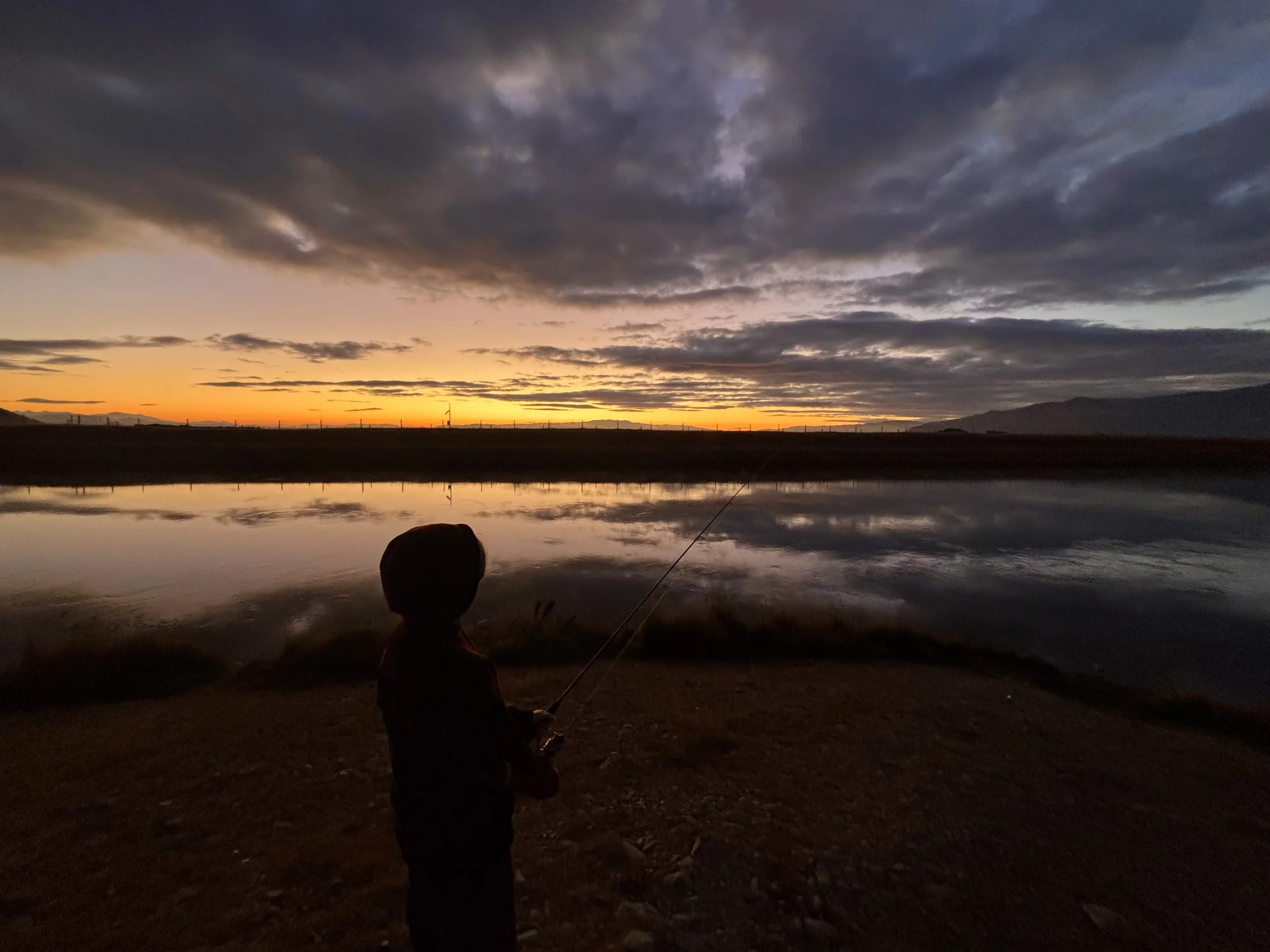
When the nervous system is in sync with it’s environment, magic happens.
I don’t know if this is a forever choice, but for now, it is exactly what he needs. I feel privileged that I could offer him a different way to grow—a way that finally honors his pace, his passions, and his complex, beautiful mind.
You don’t have to navigate it alone.
School Can’t Australia is a volunteer-led peer support organization for parents and carers of children who struggle to attend school. They move away from the labels of ‘refusal’ or ‘truancy,’ focusing on the underlying stress, anxiety, and neurodivergent needs that can make school feel unsafe.
They provide an incredible community, resources for navigating the system, and a space to feel heard without judgment.
